
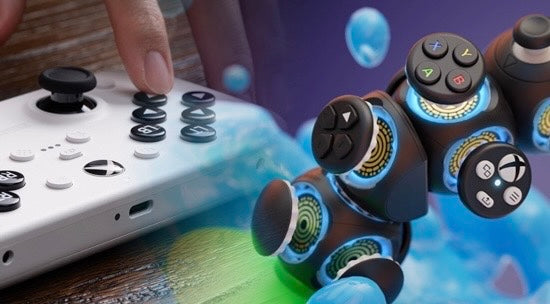
What Is an Adaptive Gaming Controller and How Does It Work?
What is an Adaptive Gaming Controller?
For decades, gaming controllers have followed the same familiar shape and layout. For many, this familiarity works well, however for others, standard controllers can be uncomfortable, difficult to use or completely inaccessible.
Adaptive gaming controllers exist to challenge the idea that there is only one right way to play. Instead of asking players to adapt to hardware, they allow hardware to adapt to the player. Removing the narrative of ‘One size fits all’. An adaptive gaming controller is a controller designed to be adjusted, reconfigured, or rebuilt to suit different bodies, abilities, and ways of playing.
What Does 'Adaptive' Mean in Gaming?
In gaming, “adaptive” refers to equipment that can be adjusted to suit different physical needs, preferences, or play styles. An adaptive gaming controller is designed to be flexible rather than fixed to a single layout or way of playing.
This flexibility includes:
· Changing the position of buttons or joysticks
· Using fewer inputs
· Adjusting how much force is required to press a button
· Rearranging components to support one-handed or low-mobility play
Rather than assuming every player has the same hands, strength, or range of motion, adaptive controllers are built around the idea that players are different and that those differences matter.
Who Are Adaptive Gaming Controllers For?
Adaptive gaming controllers are often associated with disability, and they play an important role in making games more accessible for disabled players. However, their usefulness extends far beyond any single group.
They can support:
· One-handed players
· Players with limited mobility or dexterity
· People with chronic pain or fatigue
· Players recovering from injury
· Anyone who finds standard controllers uncomfortable to use
In practice, adaptive controllers are about choice and comfort, not labels. They allow players to shape their setup around what works best for them, rather than forcing themselves to fit a predefined layout.
How Do Adaptive Gaming Controllers Work?
At a basic level, adaptive gaming controllers communicate with consoles and PCs in the same way as standard controllers. The console doesn’t need to “see” how a controller is physically arranged, it simply receives input signals like button presses or joystick movement.
What makes adaptive controllers different is how those inputs are created.
Many adaptive systems separate inputs from a fixed shell. Buttons, joysticks, and triggers may be repositioned, swapped, or reassigned. Some setups rely heavily on software, allowing players to remap inputs digitally. Others focus on physical adaptability, changing the layout itself.
Often, the most effective solutions combine both approaches.
Button Remapping vs Physical Adaptation
Button remapping is one of the most common accessibility features in gaming. It allows players to change what a button does, helping make essential actions easier to reach or reducing strain during play.
However, remapping alone doesn’t change where buttons are physically placed.
Physical adaptation goes a step further. By changing the placement, spacing, or orientation of inputs, players can reduce awkward hand positions, improve comfort, and play for longer periods without fatigue.
This distinction is important. Accessibility isn’t just about software settings, it’s also about how a controller feels in someone’s hands.

Adaptive Controllers vs Standard Controllers
Standard controllers are built around a single assumption: that players will use two hands, apply a similar amount of force, and reach the same buttons comfortably.
Adaptive controllers start from a different perspective. They recognise that:
· Hands vary in size and strength
· Movement can be limited or asymmetrical
· Comfort isn’t fixed and can shift from day to day
By allowing layouts to change, adaptive controllers offer flexibility where standard controllers remain fixed.
The Rise of Modular Gaming Controllers
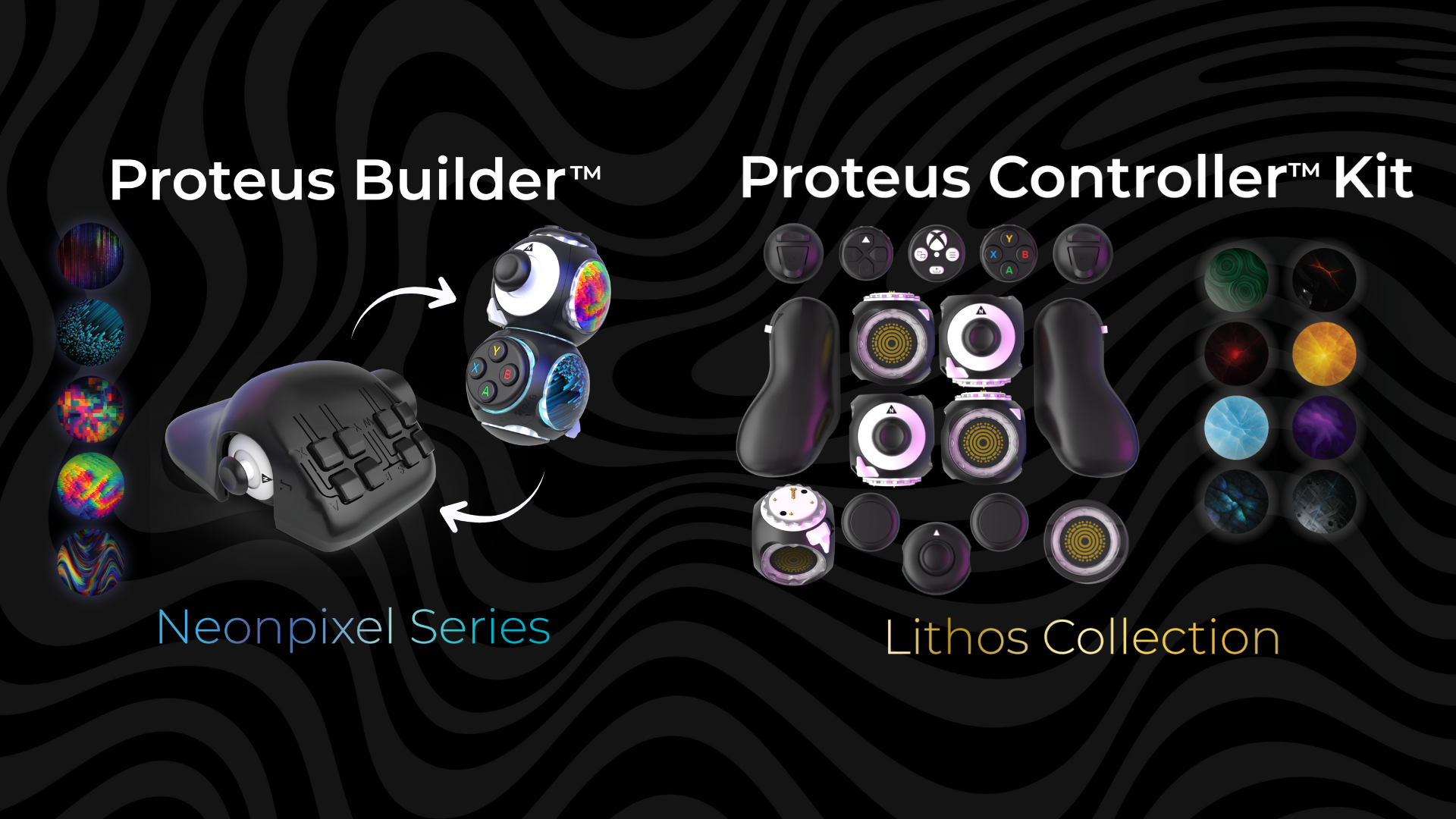
More recently, modular design has started to change how players think about controllers altogether. Modular controllers allow players to physically build and rebuild their controller layouts over time, experimenting with different configurations as needs change.
Instead of choosing one setup and sticking with it, modular systems support ongoing adaptation. This approach reflects a simple idea: accessibility isn’t static.
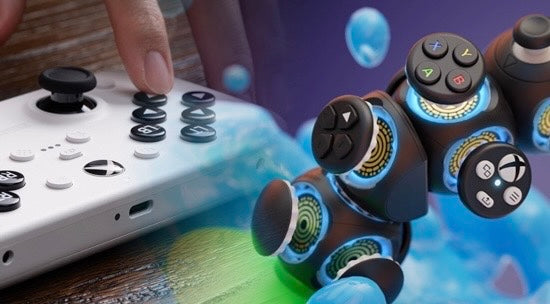
Controllers like the Proteus Controller by ByoWave explore this modular approach, enabling players to assemble input layouts that suit them and allow changes to be made to those layouts as needed.
Real-World Examples of Adaptive Gaming Controller Setups
Adaptive gaming controllers are most effective when they’re configured around the games people want to play. As there’s no single correct layout, players can build setups that match both their physical needs and the demands of the chosen game.
Accessible controllers for racing games
Racing games often rely on smooth, continuous control rather than rapid button inputs. Some players reduce the number of required inputs by focusing on a joystick or motion-based steering, paired with larger, more accessible buttons for acceleration and braking.
For players who find traditional steering inputs difficult or strenuous , gyro-based control can offer an alternative way to steer using natural hand or arm movement. This can reduce the need for constant grip or fine thumb movements, helping players maintain control during longer sessions while minimising strain. Adjusting button spacing and input force further supports comfort and consistency over time.
One-handed controller configurations
For players using one hand, layouts can be condensed so that essential inputs are grouped within easy reach. Actions that would normally be spread across both sides of a standard controller can be repositioned, allowing one-handed play without sacrificing functionality.
Low-mobility or fatigue-aware setups
Some players configure their controllers to use fewer buttons overall, prioritising the most important actions. This approach can be especially useful for games that involve repeated inputs over longer periods, helping reduce fatigue while maintaining comfort and control.
These examples highlight why adaptability is imperative. Rather than asking players to change how they play, adaptive controllers allow the setup itself to change around the player and the game they want to enjoy.
Why Adaptive Gaming Continues to Evolve
There is no single, final solution in accessibility. Needs change, games evolve, and players’ relationship with play alters over time. Adaptive gaming controllers are part of an ongoing process of learning, iteration, and collaboration with the people who use them.
As gaming continues to grow, the expectation that everyone should play in the same way feels increasingly outdated. Adaptive controllers represent a shift toward more inclusive, flexible design, one that puts players back at the centre of the experience.
Adaptive Gaming is About Choice
At its core, adaptive gaming isn’t about creating alternative equipment. It’s about recognising that one size does not fit all, and that thoughtful design gives people choice.
By giving players the ability to shape their own tools, adaptive gaming controllers support a more personal and accessible way to play

Leave a comment
This site is protected by hCaptcha and the hCaptcha Privacy Policy and Terms of Service apply.