
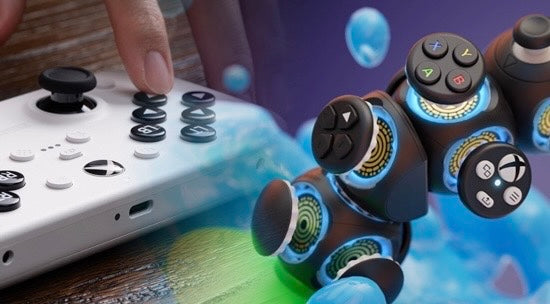
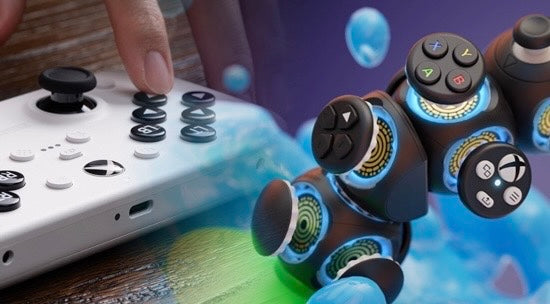
Why Modular, Player-Built Controllers Represent the Next Step in Adaptive Gaming
Modular, Player-Built Controllers
Adaptive gaming has come a long way in a short matter of time. As time goes on, more players are seeking hardware that works with them, not against them. As accessibility improves, expectations are evolving too.
The next step in adaptive gaming hardware is more than just adaptive, it’s modular.
Rather than choosing a controller that tries to work for everyone, modular, player-built controllers give players something more powerful: the ability to shape their own setup and layout, in a way that suits how they play.

The Limitations of Fixed Controller Design
Most gaming controllers, adaptive or otherwise, are built around a fixed layout. Even when accessibility features are added, the physical structure of the controller rarely changes.
This creates a familiar challenge:
· Players adapt their hands, posture, or play style to the controller
· Instead of using a controller that can adapt to the specific player.
For some players, this approach works. For many others, especially those with changing needs, fatigue, or asymmetrical movement, these fixed designs can quickly become limiting.
Accessibility shouldn’t stop at a single configuration. It should allow for change as the player changes.
Why Modularity Changes the Conversation
Modular controllers take a different approach. Instead of offering one accessible layout, they allow players to build, adjust, and rebuild their controller over time with no limitations on the number of possible configurations.
This matters because:
· Players don’t all interact with controllers in the same way
· Physical needs can change day to day, not just over years
Modularity turns the controller into a flexible system, opposed to the assumption that it is a finished product.

Designing Around the Player, Not the Layout
A player-built controller recognises the fundamental idea: that the player knows their body better than any fixed design ever could.
Being able to:
· Move buttons closer or further apart
· Reduce or increase input density
· Experiment with layouts without committing to one design/setup
allows players to discover what works best for them and adjust as their needs evolve over time.

Different Approaches in Adaptive Gaming Hardware
Many adaptive controllers focus on compatibility or external add-ons/accessories. Others rely heavily on software customisation while keeping physical layouts largely unchanged.
These approaches play an important role in accessibility, but they can often treat physical adaptability as a secondary feature.
Modular systems place physical adaptability at the centre. Instead of adapting around a controller, players can build a controller that adapts with them.
Where Modular Design Meets Long-Term Accessibility
Accessibility isn’t static, players needs can change due to:
· Injury or recovery
· Fatigue over longer sessions
· Changes in strength or range of motion
· New games that require different inputs
A modular controller doesn’t lock players into a single moment in time. It allows accessibility to grow alongside them, making it a more sustainable approach to inclusive design.
ByoWave and the Future of Modular Play
The Proteus Controller by ByoWave explores this modular philosophy through player-built layouts and adaptable components, encouraging experimentation rather than prescribing solutions.
It reflects a broader belief that good design gives control back to the player.
As adaptive gaming continues to evolve, modular controllers point toward a future built around flexibility rather than fixed layouts.

Building Toward What Comes Next
The future of gaming hardware isn’t about creating one controller that works for everyone. It’s about creating systems that let players decide what works for them.
Modular, player-built controllers move adaptive gaming toward a more personal, flexible experience, one shaped by the player, not predefined assumptions.

Leave a comment
This site is protected by hCaptcha and the hCaptcha Privacy Policy and Terms of Service apply.